CONTENTS HOME SERVICES COPYRIGHT DISCLAIMER SUPPORT US


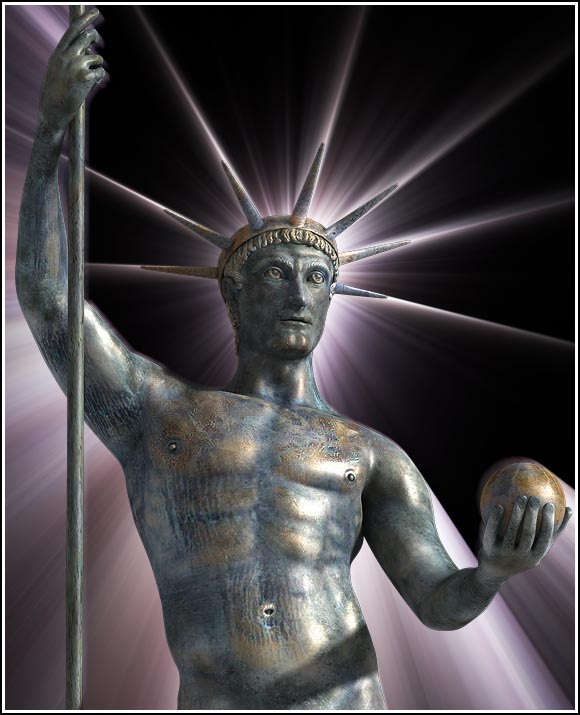
FLAVIUS VALERIUS AURELIUS CONSTANTINUS (273-337)


INTRODUCTION

CONTENTS

WHAT'S NEW

MUSEUM


LINKS

AWARDS


The following text is a shortened version of Michael DiMaio's Constantine I page (used with his permission).


Flavius Valerius Aurelius Constantinus, the son of Constantius Chlorus and Helena, seems to have been born in Naissus in Serbia on 27 February ca. 272 or 273 C.E. When his father had becomeCaesar in 293 C.E., Constantius had sent his son to the Emperor Galerius as hostage for his own good behavior; Constantine, however, returned to his dying father's side in Britain on 25 July 306. Soon after his father's death, Constantine was raised to the purple by the army.

The period between 306 and 324, when Constantine became sole imperator, was a period of unremitting civil war. Two sets of campaigns not only guaranteed Constantine a spot in Roman history, but also made him sole ruler of the Roman Empire. On 28 October 312 he defeated Maxentius, his opponent, at the Battle of the Milvian Bridge; in 314, 316, and 324, he repeatedly defeated his last remaining rival Licinius. Once he had overcome him, he was the undisputed ruler of the Roman world. In passing, it is worth noting that Maxentius and Licinius were both brothers-in-law of Constantine.

Constantine and Byzantium

In 324, after his defeat of Licinius, Constantine decided to rename Byzantium after himself and make it a governmental rival of the "Old" Rome; the renaming took place after 18 September 324 and before 326, although the actual construction started late in 324. The emperor's building program was quite extensive and included the construction of churches and, it is said, paganism was excluded from the city. Constantine had the city officially dedicated on 11 May 330; although the emperor said he had founded the city on orders from God, the dedication ceremonies of the city offended no one. The city itself, however, was only an imperial residence until 359 when it became the official capital of the empire.

Although Constantine reputedly used Licinius' war chest, which he had captured there, to meet the expenses of the new construction, the cost to the imperial treasury had to be extensive in light of the emperor's apparent lavishness in relation to finances. In fact, each time the emperor levied a tax on his subjects, they groaned. The sixth century Greek historian Zosimus gleefully notes that Constantine's taxes were so excessive that fathers were forced to hire out their daughters as prostitutes to pay debts. In any case, the emperor seems to have been an easy target for the unscrupulous.

Constantine's Death

Constantine died on 22 May 337 near Nicomedia on his way east to fight the Persians. Constantine II, Constantius II,Constans I, Constantina, and Helen, born of his union with Fausta, survived him, whereas Crispus, his son by Minervina, was executed ca. 326 along with Fausta for reasons that are not clear. After a bloody purge of members of the Royal family which may have had its roots in the religious strife between the Arian and Orthodox factions at the imperial court, the three sons of the late emperor were raised to the purple by the army on 9 September 337. His mausoleum was at the Holy Apostles.


Copyright © 2009 Byzantium 1200